
 Getty Images
Article
New research is giving older adults reason for hope, showing it is never too late to take charge of their health.
Learn the why behind the headlines.
Subscribe to the Real Truth for FREE news and analysis.
Subscribe NowIt is never too late to improve your health.
You have lived a long life—enjoying many memories, starting a family and watching them grow. Perhaps your career is in its twilight or has already come to an end. It may feel like time is running out to be your best self physically, but this is not so if you know what to do.
New research offers hope for older adults. The Alzheimer’s Association and the Wake Forest University School of Medicine recently led a two-year clinical trial that showed how simple, consistent habits—including daily walks, brain games and better meals—can improve heart health, mental clarity and overall vitality well into one’s later years.
For Phyllis Jones, 66, of Aurora, Illinois, the trial gave her a sense of control. “It was the first time,” she said, “I felt I was doing something proactive to protect my brain.”
Science continues to confirm what the Bible taught long ago. God designed the human body to thrive when it follows His physical laws. “I wish above all things that you may prosper and be in health,” wrote the apostle John (III John 2). These words reflect God’s desire that we live active, balanced lives.
The connection between biblical wisdom and modern research is clear: Lasting health comes from steady, intentional choices that nourish the whole person—physically, mentally and spiritually.
Building Better Habits
One of the most encouraging lessons from the Wake Forest trial is that you do not need to make dramatic changes to improve your health. In fact, the best results came from small, steady habits done consistently.
Participants walked or stretched for 30 minutes a day, swapped butter for olive oil, added berries and leafy greens to their meals and spent time doing puzzles or memory games. These small, steady steps led to significant improvements in heart health, blood sugar levels, weight and cognitive function. In short—what strengthens the body also strengthens the mind.
This mirrors principles found in the Bible. God designed human beings to move and work, not live idle lives. Scripture encourages diligence, balance and moderation, all qualities that promote both spiritual and physical well-being.
The prophet Daniel set an example of this balance. When offered the rich foods of Babylon, he asked instead for a diet of “pulse”—vegetables and grains (Dan. 1:12). His decision, made out of obedience to God, led to clearer thinking, better health and greater vitality than those around him (vs. 15).
You do not need to overhaul everything in your life at once. Replace processed foods with whole, natural ingredients. Take a morning walk. Do a word game instead of watching another TV episode.
The Bible encourages this same steady persistence: “Let us not be weary in well doing: for in due season we shall reap, if we faint not” (Gal. 6:9).
Anyone willing to build good habits patiently and purposefully can reap lasting benefits. (Of course, if you are considering making major changes to your health routine, it is wise to consult your doctor or another health professional before doing so.)
Strengthening Mind and Spirit
As we age, it is natural to think about more than physical health. Many wonder how to stay sharp, how to keep contributing or how to avoid becoming a burden to loved ones. These concerns are valid, yet the Wake Forest study offers a real reason for encouragement.
The trial found that even modest improvements to diet and activity can lead to clearer memory, better mental focus and an overall stronger sense of well-being.
The Bible reveals a connection between mental and spiritual health. The apostle Paul wrote that “God has not given us the spirit of fear; but of power, and of love, and of a sound mind” (II Tim. 1:7). A sound mind, according to Scripture, helps us think clearly, act wisely and stay grounded even amid the challenges of life.
Good habits—whether physical, mental or spiritual—work together. Exercise improves mood and reduces anxiety. Healthy eating supports focus and energy. Spiritual practices such as prayer, meditation on Scripture and serving others bring balance and peace. Together, these reinforce the mind God intends us to have.
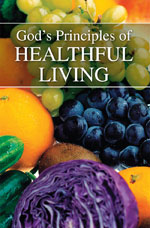
Our booklet God’s Principles of Healthful Living explains that caring for your body is not vanity—it is part of honoring your Creator. Staying active and alert physically supports your spiritual life and helps you remain positive and engaged in your community, rather than drifting into passivity or discouragement.
Staying the Course
The greatest benefits from the Wake Forest University study came to those who kept going—who made small changes and stuck with them.
Ms. Jones joined the trial after years of off-and-on efforts to improve her health. What finally moved her was her adult child’s concern about having to care for her at a relatively early age. “For me, that was the wake-up call,” Ms. Jones told CNN. “That’s when I found the [Wake Forest] study and my life changed. What I accomplished during the study was phenomenal—I’m a new person.”
Her story illustrates a timeless truth that is covered in the Healthful Living booklet: “Good health is a precious attribute. You must maintain it. Otherwise, it deteriorates. Traditional living habits and environments are hostile to good health. Unless you make an effort to protect and maintain it, good health could easily disappear—even at an early age.”
The apostle Paul drew a similar comparison between physical and spiritual endurance: “I keep under my body, and bring it into subjection” (I Cor. 9:27). Like physical fitness, spiritual strength requires discipline over time. Neither happens by accident—and both are worth the work.
The study revealed something deeply encouraging—those who stuck with simple lifestyle changes experienced greater benefits. And this is key: Success will not come from doing everything perfectly, but from staying consistent over time.
Ms. Jones was initially advised to do 30 minutes of aerobic exercise each day to raise her heart rate, along with strength training and stretching sessions several times a week. She found it difficult at first. “After that first 10 minutes, I was sweating and exhausted,” she said. “But we went slow, adding 10 minutes at a time, and we kept each other honest. Now I just love to work out.”
That mindset—steadily moving forward—is what brings lasting results. As our biblical resource on health puts it: “Given the correct habits and environment, the body was designed to be self-healing and naturally healthy.”
You do not need to be perfect. You just need to keep going.
Health for the Whole Person
The Bible shows that you are more than just a body or a brain. True health means tending to all parts of your life: physical, mental and spiritual.
As you grow older, your goal is not just to avoid illness but to stay vibrant, clear-minded and ready to encourage and serve others. With every walk, every healthy meal and every intentional small choice, you are preserving the tools God gave you to fulfill your purpose.
God’s Principles of Healthful Living offers a deeper look at what Scripture teaches about health. It explains how to apply God’s timeless instruction in a modern world, helping you take meaningful steps toward better living—without extremes or gimmicks. Read or order your free copy today.
The Bible is clear: Your later years can still be rich with mental clarity, physical strength and peace of mind. With the right habits—and God’s help—you can prove that His way to health truly works.
This article contains information from The Associated Press.
More on Related Topics:
- Afghan Hunger Crisis Deepens as Aid Funding Falls Short, UN Says
- Israel’s Longest War Is Leaving a Trail of Traumatized Soldiers, With Suicides Also on the Rise
- The Blind to See—Humanity’s Fight to Cure Blindness
- ‘Nightmare Bacteria’ Cases Are Increasing in the U.S.
- Americans Get More Than Half Their Calories from Ultra-Processed Foods, CDC Report Says
Latest News
-
December 17, 2025
- Explainer: What’s Next for the Gaza Ceasefire, and Will the Truce Last? December 16, 2025
- Afghan Hunger Crisis Deepens as Aid Funding Falls Short, UN Says December 15, 2025
- ‘It Was Dead People Everywhere’: Inside Australia’s Hanukkah Massacre December 11, 2025
- Bulgaria’s Government Resigns After Mass Protests
- ‘It’s Not Safe to Live Here.’ Colombia Is Deadliest Country for Environmental Defenders December 10, 2025
- A Year After Assad’s Fall, Families of Missing Detainees Languish Without Answers December 9, 2025
- Australia’s Social Media Ban for Children Takes Effect in World First
- Cambodia Vows Fierce Fight Against Thailand in Escalating Border Conflict December 8, 2025
- ‘Everything Destroyed’ as Indonesia’s Aceh Grapples with Disease After Floods December 3, 2025
- Explainer: Why Is Fate of Donetsk Region a Sticking Point in Talks on Ending War in Ukraine? November 26, 2025
- Sudan’s Top General Rejects U.S.-Led Ceasefire Proposal, Calling It ‘The Worst Yet’
- Gaza Truce Progress Slow as Israeli-Hamas Violence Persists
- More People Are Addicted to Marijuana, But Fewer of Them Are Seeking Help, Experts Say November 21, 2025
- What Is in the U.S. Peace Plan for Ending the War in Ukraine?
- Explainer: What’s Behind Nigeria’s Latest School Abductions and Church Attack?
- A Drying-Up Rio Grande Basin Threatens Water Security on Both Sides of the Border November 19, 2025
- The Education Department Is Dismantling. Here’s What That Means November 14, 2025
- Women in Darfur Report Rape, Lost Children amid Sudan Violence, UN Says
- 10 Years After the Bataclan Massacre, Paris Is Still Scarred by That Night of Terror November 13, 2025
- Israel’s Longest War Is Leaving a Trail of Traumatized Soldiers, With Suicides Also on the Rise
