
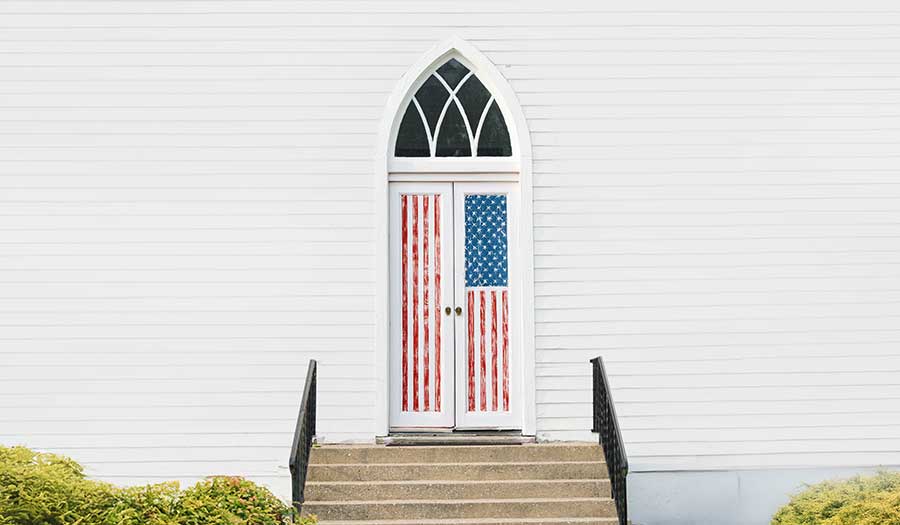
 Getty Images
Article
The Bible reveals why religious revivals always seem to fade—and the only path to true, lasting change.
Learn the why behind the headlines.
Subscribe to the Real Truth for FREE news and analysis.
Subscribe NowIs the tide turning? After decades of decline in religious affiliation, 31 percent of U.S. adults in February 2025 said religion is gaining influence in American life—up from just 18 percent a year earlier.
The numbers from the Pew Research Center also indicated “an overall shift toward more positive views about religion’s role in American life over the past five years or so.”
As 2025 began, other reports demonstrated a quiet surge in spiritual curiosity. Bible publishers noted double-digit growth after years of decline—what The Wall Street Journal called “a golden age of Bible publishing.”
Faith-based media has boomed across the board: One market estimate values the U.S. Christian streaming sector at $2 billion in 2025, partly driven by growing demand for Christian-themed entertainment (Data Insights Market).
Polls, publishing trends and viewing habits all told the same story: Americans are paying attention to God again.
Then a single event supercharged it all. On September 10, political activist Charlie Kirk was assassinated while addressing students at a Utah university.
In a podcast interview released just a few months earlier, he was asked how he hoped to be remembered after he died. His answer was simple: “For courage for my faith.” That faith, he added, was “the most important thing” in his life.
The reactions to his death were immediate and emotional. Candlelight vigils, prayer marches and overflowing church services swept the country. One post on X (formerly Twitter) captured a widespread feeling that Kirk’s death had “started a mass awakening…This is what Charlie would’ve wanted most, a massive revival.”
Statistics reflected the mood: “Bible sales have surged by more than a third following the assassination of Charlie Kirk,” The Telegraph reported, estimating 2.4 million copies sold in September alone—a 36 percent jump from the previous year.
From politicians to podcasters to teens on social media, America is once again talking about God. Beneath the emotion lies something deeper—a hunger for meaning that culture and politics have failed to satisfy. Millions are reaching for something lasting, something real.
The question is whether this moment can become more than talk. Can it bring the lasting change so many desire?
‘A Spiritual Reawakening’
Eleven days after Kirk’s death, mourners filled State Farm Stadium in Glendale, Arizona—not for a funeral but for what many likened to a revival service. Speakers all talked about God, the Bible and faith.
Vice President JD Vance told the crowd: “The evil murderer who took Charlie from us expected us to have a funeral today. Instead, my friends, we have had a revival…”
Later in the event, President Donald Trump said that Kirk had believed America needed “a spiritual reawakening,” adding, “We have to bring back religion to America, because without borders, law and order, and religion you don’t really have a country anymore.”
The sense of renewal was not limited to politicians.
Benny Johnson, a conservative commentator who was close friends with Kirk, compiled many online posts in a video that mentioned packed churches, first-time visitors and mass baptisms in the days after the assassination.
One said, “The church was full today…people were parking in the grass.” Another said, “Hundreds came to Christ through baptism after the service. The Charlie effect.”
Other posts described deeply personal shifts: “On our way to Church for the first time in at least 15 years.” “Who bought a Bible for the first time after [Kirk’s death]?” One country singer urged his 5 million followers, “Follow Jesus Christ…If you haven’t gotten your heart right with Him…today is the day.”
In an interview with National Catholic Register, New York Times writer Ross Douthat discussed what could be driving the increased curiosity about God and the Bible. He noted a “general recovery of interest in the idea that religion is good for society.” The age of atheism, he added, has passed, with many realizing that “getting rid of organized religion did not in fact make the world a happier, less polarized, more enlightened and rational place.”
For many, one Bible promise has become the verse of the moment: “If My people, which are called by My name, shall humble themselves, and pray, and seek My face, and turn from their wicked ways; then will I hear from heaven, and will forgive their sin, and will heal their land” (II Chron. 7:14).
Before the 2024 presidential election, one Christian outlet called for a “National 2 Chronicles Day” on Election Day that urged believers to show up at polling places and in Washington to pray.
Why Revivals Rise and Fall
This is not the first time America has longed for renewal. Throughout its history, waves of religious fervor have swept the nation.
The First Great Awakening of the 1730s filled meetinghouses with fiery preaching and public displays of repentance—but within a generation, zeal cooled and daily life returned to routine. The Second Awakening of the early 1800s promised moral reform—yet schisms among denominations blunted any lasting impact. The Prayer Revival of 1857 began with lunchtime prayer meetings for businessmen—yet despite initial passion, attendance rapidly dwindled.
In the next century, the Jesus Movement of the 1970s brought youthful energy—yet within a decade, it was mostly absorbed into more established denominations. And the Promise Keepers rallies of the 1990s filled stadiums with men pledging faith and integrity—only to dissolve when the emotion of the moment ebbed.
Each of these movements began with sincerity and a rejection of national drift toward secularism. Yet each ended the same way: A spark that burned high, bright—and then out.
This pattern is not uniquely American. The Bible records it too. Ancient Israel repeatedly cried out to God in crisis, only to backslide soon after.
The book of Judges summarizes their cycle: “When the Lord raised them up judges, then the Lord was with the judge…And it came to pass, when the judge was dead, that they returned, and corrupted themselves more than their fathers” (2:18-19).
Through the prophet Hosea, God lamented the phony righteousness of Israel’s leading tribes: “O Ephraim, what shall I do unto you? O Judah, what shall I do unto you? For your goodness is as a morning cloud, and as the early dew it goes away” (6:4).
Israel’s goodness evaporated like dew under the morning sun—momentary conviction without lasting commitment.
And in that example lies a warning for the U.S.: Spiritual awakenings may seem to start well, but without real change, they will not endure.
What God Really Wants
The Bible explains why revivals through history have faded. God requires something far deeper than emotion—He wants transformation.
Through the prophet Isaiah, He rebuked His own people for showing outward devotion while ignoring His commands: “Forasmuch as this people draw near Me with their mouth, and with their lips do honor Me, but have removed their heart far from Me, and their fear toward Me is taught by the precept of men” (29:13).
Centuries later, Jesus Christ cited that very verse during His earthly ministry to describe the religious leaders of that time—people who looked devout but trusted their own traditions and teachings more than God’s Word. They appeared zealous, yet resisted making deeper changes in their lives.
Read II Chronicles 7:14 one more time, this time paying close attention to what God desires when people turn to Him: “If My people, which are called by My name, shall humble themselves, and pray, and seek My face, and turn from their wicked ways; then will I hear from heaven, and will forgive their sin, and will heal their land.”
God desires humility—for people to realize they do not have all the answers. He then wants them to turn from their own ways and seek Him.
The Hebrew word translated “turn” means to reverse direction—to change course, not merely express regret.
Other passages echo this: “Rend your heart, and not your garments, and turn unto the Lord your God” (Joel 2:13). “Let us search and try our ways, and turn again to the Lord” (Lam. 3:40).
True change is not measured by how loudly a nation invokes God’s name, but by how willingly its people live by His Word.
The Hope of Lasting Awakening
Every revival begins with hope—that this time, change will last.
Across the U.S., many are reading their Bibles again, praying more and returning to church for the first time in years. Yet what will be the result of this new movement? Will an entire nation truly turn to God?
History and prophecy both say no.
God is not working with whole nations right now. He is patient, carrying out His purpose in ways the world does not yet understand. But the Bible shows He will soon intervene in world affairs decisively, once and for all, to establish His Kingdom.
God’s Plan is to give every human being, past, present and future, the chance to truly know Him.
The apostle Peter wrote, “The Lord is not slack concerning His promise…but is longsuffering to us-ward, not willing that any should perish, but that all should come to repentance” (II Pet. 3:9). To repent simply means to change, sincerely and from the heart.
Isaiah described what life will be like: “It shall come to pass in the last days, that the mountain of the Lord’ s house shall be established in the top of the mountains…and all nations shall flow unto it” (2:2). When that day arrives, “the earth shall be filled with the knowledge of the glory of the Lord, as the waters cover the sea” (Hab. 2:14).
Clearly, none of these things are occurring today. The natural question: What is God doing now, before He sets up His Kingdom on Earth?
He is working with individuals. Jesus said, “No man can come to Me, except the Father which has sent Me draw him” (John 6:44). This could include you.
God calls people to Him. When doing so, He opens their minds to spiritual truth. He invites them to repentance and lasting conversion: “Repent you therefore, and be converted, that your sins may be blotted out…” (Acts 3:19).
That process of repentance—leading to true conversion—is not a fleeting emotional high. It is the beginning of a lifelong relationship with your Creator. It is a process of building His character and becoming more like Him over time.
When God starts to open your eyes to His truth, you will begin to see the world differently. Old assumptions will no longer satisfy you. In addition, the Bible will suddenly feel alive, clear and understandable.
These are all telltale signs God is working with you. What will you do next?
The Bible gives the answer: “Prove all things; hold fast that which is good” (I Thes. 5:21). God does not want you to just believe what others say about Him. He wants you to prove it for yourself.
You should prove that God exists, that the Bible is His inspired Word, and exactly where He is working today.
To help you along that journey, The Restored Church of God, publisher of this magazine, offers free resources:
Read them carefully. Compare every statement with the Bible. Let God’s Word—not human tradition, emotion or opinion—show you what is true.
If you sense that God is calling you to something deeper, do not ignore it. Talk to Him. Ask Him to guide you. Open your Bible, seek Him earnestly—then act on what you learn.
In this current age, national spiritual movements will rise and fade—but when God begins working inside an individual, the results can last forever. The spiritual awakening that will one day fill the Earth can begin right now inside anyone willing to respond to His call.
Other Related Items:
More on Related Topics:

Latest News
-
December 17, 2025
- Explainer: What’s Next for the Gaza Ceasefire, and Will the Truce Last? December 16, 2025
- Afghan Hunger Crisis Deepens as Aid Funding Falls Short, UN Says December 15, 2025
- ‘It Was Dead People Everywhere’: Inside Australia’s Hanukkah Massacre December 11, 2025
- Bulgaria’s Government Resigns After Mass Protests
- ‘It’s Not Safe to Live Here.’ Colombia Is Deadliest Country for Environmental Defenders December 10, 2025
- A Year After Assad’s Fall, Families of Missing Detainees Languish Without Answers December 9, 2025
- Australia’s Social Media Ban for Children Takes Effect in World First
- Cambodia Vows Fierce Fight Against Thailand in Escalating Border Conflict December 8, 2025
- ‘Everything Destroyed’ as Indonesia’s Aceh Grapples with Disease After Floods December 3, 2025
- Explainer: Why Is Fate of Donetsk Region a Sticking Point in Talks on Ending War in Ukraine? November 26, 2025
- Sudan’s Top General Rejects U.S.-Led Ceasefire Proposal, Calling It ‘The Worst Yet’
- Gaza Truce Progress Slow as Israeli-Hamas Violence Persists
- More People Are Addicted to Marijuana, But Fewer of Them Are Seeking Help, Experts Say November 21, 2025
- What Is in the U.S. Peace Plan for Ending the War in Ukraine?
- Explainer: What’s Behind Nigeria’s Latest School Abductions and Church Attack?
- A Drying-Up Rio Grande Basin Threatens Water Security on Both Sides of the Border November 19, 2025
- The Education Department Is Dismantling. Here’s What That Means November 14, 2025
- Women in Darfur Report Rape, Lost Children amid Sudan Violence, UN Says
- 10 Years After the Bataclan Massacre, Paris Is Still Scarred by That Night of Terror November 13, 2025
- Israel’s Longest War Is Leaving a Trail of Traumatized Soldiers, With Suicides Also on the Rise
